Does your company utilize contract manufacturers for the fabrication of metal components? Today, many businesses take advantage of this outsourcing model to streamline supply chain management, minimize overhead, and increase overall operational efficiency.
However, global supply chains are increasingly vulnerable to geopolitical shifts, volatile freight rates, and cross-border logistics bottlenecks. If your business is currently experiencing extended shipping delays, unexpected product defects, or frustrating communication breakdowns with overseas suppliers, it might be time to evaluate your sourcing strategy.
Transitioning to domestic production is no longer just about geography; it is a strategic business decision. Let’s explore the core benefits of local manufacturers and how partnering with local manufacturers can insulate your supply chain while protecting your bottom line.
1. Drastically Reduced Lead Times and Faster Time-to-Market
In today’s demand-driven market, responsiveness is a competitive advantage. A delay of even a few days can cascade down your production line, resulting in missed deadlines, stockouts, and strained customer relationships.
Local contract manufacturing inherently offers significantly shorter lead times compared to offshore options. Instead of waiting weeks or months for cargo ships to cross maritime routes and clear customs checkpoints, domestic manufacturing relies on regional logistics. This drastic reduction in transit time allows businesses to maintain lower safety stock levels, lower warehousing costs, and pivot rapidly to meet sudden shifts in consumer demand.
2. Granular Control Over Quality Assurance (QA)
When manufacturing high-precision parts or structural metal components, even a fraction of a millimeter variance can render an entire batch useless. When your manufacturing partner operates thousands of miles away, managing quality assurance becomes incredibly complex.
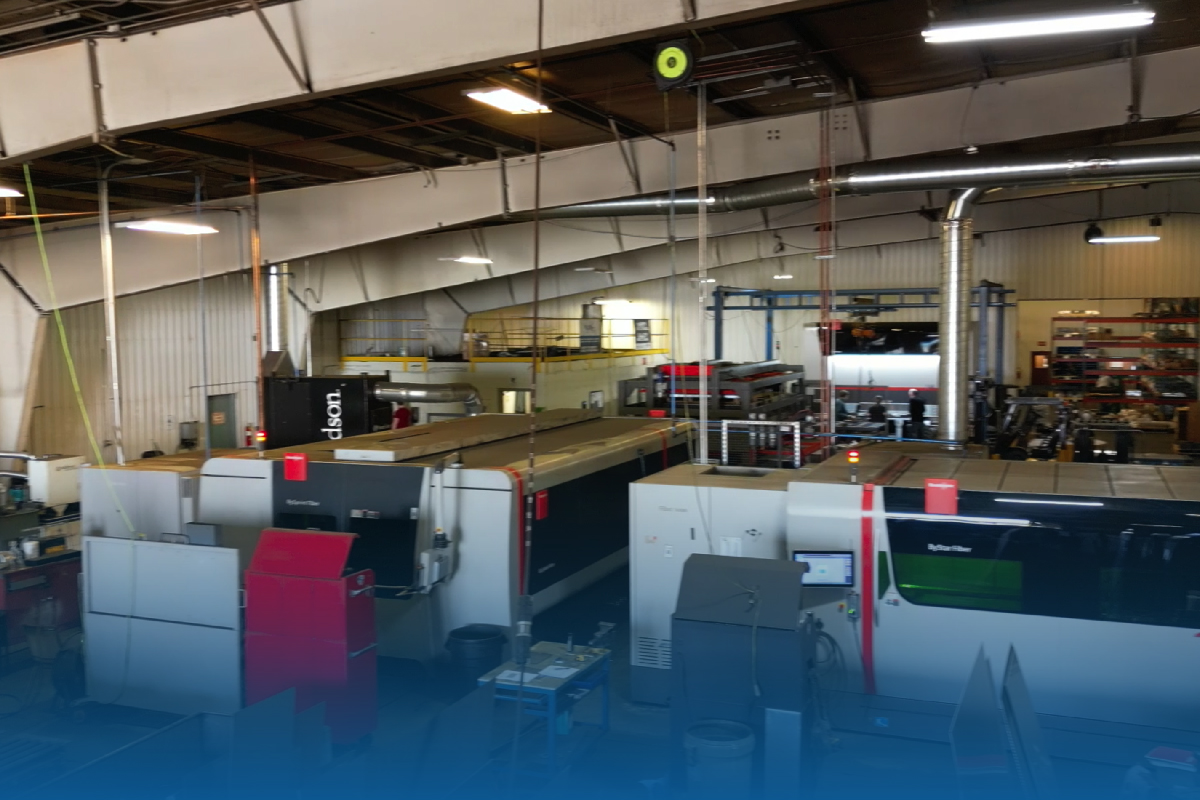
- Advanced Equipment and Standards: Local stateside manufacturers operate under strict regulatory frameworks and typically invest heavily in state-of-the-art automated machinery to maintain high accuracy and speed.
- Rapid Prototyping: If you do not have finalized blueprints, local vendors excel at prototype development services. Engineers can collaborate, iterate, and test physical samples in days rather than waiting weeks for international air freight. Knowing how to vet a metal fabrication vendor early in this stage ensures your designs are perfectly optimized for scale.
- Real-Time Inspection: If a quality defect arises, quality assurance in manufacturing is significantly easier to enforce domestically. Quality managers can easily schedule on-site facility audits or resolve engineering issues over a brief phone call, stopping defective production runs before mass quantities are shipped.
3. The Financial Equation: Direct vs. Hidden Sourcing Costs
While overseas labor rates often appear cheaper on a spreadsheet, the “Total Cost of Ownership” (TCO) frequently tells a different story. Domestic manufacturing advantages become obvious when you factor in the hidden expenses of offshore procurement:
|
Operational Variable |
Overseas Sourcing | Domestic Sourcing |
|
Logistics & Freight |
High, volatile ocean/air tariffs | Predictable, low-cost domestic freight |
|
Customs & Duties |
Subject to import taxes and tariffs |
Zero import fees or border regulations |
| Inventory Holding | High (Requires bulk orders/large MOQs) |
Low (Supports Just-In-Time manufacturing) |
| Engineering Changes | Slow, expensive, and error-prone |
Swift, collaborative, and agile |
By sourcing from U.S.-based suppliers, companies eliminate the risk of unexpected tariff hikes, fluctuating container costs, and the capital-intensive requirement of ordering massive Minimum Order Quantities (MOQs) just to justify shipping fees.
4. Mitigating Global Supply Chain Vulnerabilities
The past few years have highlighted the fragile nature of long-distance logistics. Port congestion, labor strikes, fuel price surges, and international trade disputes can instantly halt an overseas supply line.
Choosing local suppliers inherently builds operational resilience. A localized supply chain simplifies your distribution network. For example, partnering with a centrally located manufacturer utilizing established domestic highway systems ensures predictable, on-time product delivery. It allows your business to transition toward a Just-In-Time (JIT) inventory strategy, freeing up working capital that would otherwise be tied up in transit.
5. Eliminating Communication Barriers and Fostering Innovation
Effective contract manufacturing requires seamless collaboration between design engineers and production technicians. Miscommunications regarding materials, tolerances, or finishes can ruin an entire production run.
When you work with a local team, major obstacles like language barriers, massive time-zone differences, and lack of direct phone access disappear. Improved communication guarantees that your projects are completed to exact requirements, on schedule, and within budget. Furthermore, proximity allows for long-term collaborative innovation, where your manufacturer acts as an extension of your own R&D team.
Frequently Asked Questions
Q1: What is the main advantage of local contract manufacturing over overseas options?
A: Local manufacturing dramatically reduces lead times and shipping costs while offering seamless communication and strict quality control.
Q2: How does partnering with local manufacturers improve supply chain efficiency?
A: It eliminates international transit risks, customs delays, and time-zone barriers, ensuring your production line runs without costly interruptions.
Q3: Can a local manufacturer help if I don’t have exact blueprints or specifications?
A: Yes, reputable local manufacturers offer engineering support and prototype development services to design, test, and perfect your parts before mass production.
Q4: Is local sourcing cost-effective in the long run compared to cheap overseas labor?
A: Yes, because it lowers freight costs, minimizes the need for high inventory volumes, and eliminates the expensive risks of defective bulk shipments.
Q5: Why is quality assurance better with stateside contract manufacturing?
A: You get direct access to advanced technology, easier facility audits, and the ability to resolve design adjustments with the production team instantly.
Conclusion: Securing Long-Term Efficiency
Ultimately, the choice of where to source your metal components fabrication impacts your brand’s reputation for reliability. While overseas production offers a low initial unit cost, local manufacturing counters with unmatched speed, transparency, superior quality, and total cost predictability. By focusing on supply chain efficiency and domestic agility, businesses can build a leaner, more resilient model ready to outpace the competition.
Looking to optimize your fabrication processes? While choosing a domestic partner requires careful evaluation of capabilities, trusted stateside vendors like RiAlto Manufacturing offer the precision machining, welding, and prototype development services needed to keep your project timelines perfectly on track. Explore your options locally to experience the difference in your operational bottom line.[/vc_column_text][/vc_column][/vc_row]