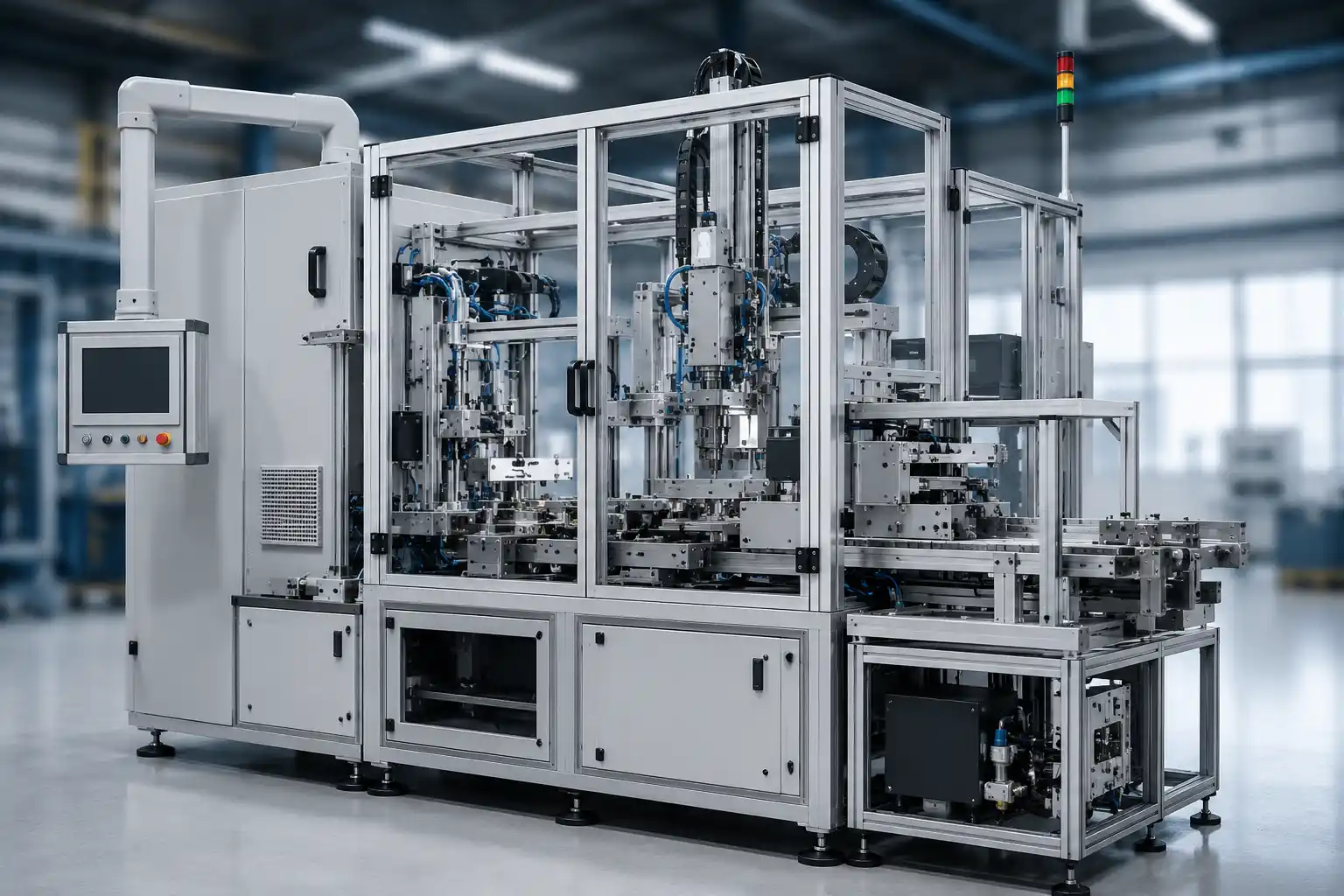
If you’ve ever asked a supplier to quote a part and got back a question like “mill or lathe?”, this article is for you. CNC (Computer Numerical Control) machines come in several forms, and each one is built to do a different job. Understanding the differences helps you talk to your machine shop, choose the right process for your part, and avoid costly redesigns.
In short: the 5 most common types of CNC machines are CNC milling machines, CNC lathes (turning centers), CNC routers, CNC laser cutters, and CNC plasma cutters. Below, we break down how each one works, what it’s best for, and how to know which one your project needs based on decades of hands-on experience running these machines every day at our Marion, Ohio facility.
1. CNC Milling Machines
 A CNC milling machine holds a rotating cutting tool in a spindle and moves it across a stationary workpiece to remove material. Mills can drill, bore, tap, and cut complex contours in a single setup.
- Best for: Brackets, housings, custom fixtures, prototypes, and parts with multiple flat or angled surfaces.
- Axes: Most CNC mills run on 3 axes (X, Y, Z), but advanced shops use 4-axis and 5-axis machines to cut complex geometries in fewer setups, improving accuracy and cutting lead time.
- Materials: Aluminium, steel, stainless steel, brass, and engineering plastics.
At RiAlto, our fleet includes 5-axis and dual-spindle HAAS CNC milling centers, which let us hold tight tolerances on complex parts without multiple repositioning steps, a big reason manufacturers in the automotive, medical, and industrial equipment industries trust us with production runs.
2. CNC Lathes (Turning Centers)
 While a mill moves the tool around a stationary part, a CNC lathe does the opposite: it spins the workpiece at high speed while a stationary cutting tool shapes it. This makes lathes the go-to choice for round, cylindrical parts and an excellent option when you need industrial machines designed to your requirements.
- Best for: Shafts, bushings, pins, fittings, and any symmetrical, round component.
- Axes: Typically 2-axis (X and Z), though live-tooling lathes add milling capability for more complex parts in one operation.
- Materials: Metals and plastics that need a smooth, precise cylindrical finish.
3. CNC Routers
 CNC routers look and operate similarly to mills but are generally built for speed over rigidity, cutting flat or 3D shapes out of sheet material by moving a spindle-mounted bit across a large table.
- Best for: Wood, plastics, composites, and softer, non-ferrous metals like aluminium sheet.
- Common uses: Signage, panels, moulds, and large-format cutting where speed matters more than extreme tolerances.
4. CNC Laser Cutters
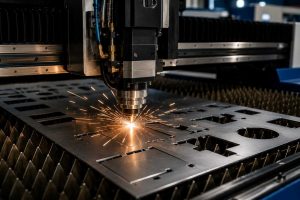 A CNC laser cutter uses a high-powered, computer-guided laser beam to cut or engrave material with extreme precision. Because there’s no physical cutting tool touching the material, laser cutting produces clean edges with minimal distortion even on intricate patterns.
- Best for: Sheet metal parts, precision cutouts, and prototypes that need to move quickly into production.
- Advantages: Fast turnaround, excellent repeatability, and the ability to cut fine detail that would be difficult with a mechanical tool.
Precision laser cutting is one of RiAlto’s core capabilities, and we run it alongside our machining and welding services under one roof so a part can go from laser-cut blank to finished, welded assembly without changing vendors.
5. CNC Plasma Cutters
 CNC plasma cutters use a jet of ionized gas (plasma) to cut through electrically conductive metals like steel, aluminium, and stainless steel. Plasma cutting is faster and more economical than laser cutting for thicker materials, though it typically produces a slightly less precise edge.
- Best for: Thick steel plate, structural components, and heavy fabrication work where speed and cost matter more than fine detail.
- Common uses: Frames, brackets, and structural parts for agriculture, construction, and industrial equipment.
Which CNC Machine Does Your Project Need?
Most manufacturing projects actually use more than one of these processes together. A bracket might start as a laser-cut blank, get precision-milled for mounting holes, and finish with a welded assembly. If you want the full picture of how precision CNC parts are made from CAD file to finished part, our complete process guide breaks down every step. That’s exactly why manufacturers increasingly look for a single shop that can handle multiple CNC processes; it cuts down on shipping between vendors, reduces lead time, and keeps quality consistent from start to finish.
If you’re not sure which process fits your part, the fastest way to find out is to talk to a shop that runs all of them daily.
Frequently Asked Questions
What is the most common type of CNC machine?
CNC milling machines and CNC lathes are the two most widely used types, since they cover the majority of machined metal and plastic parts across nearly every industry.
What are the 5 types of CNC machines?
The five most common types are CNC milling machines, CNC lathes, CNC routers, CNC laser cutters, and CNC plasma cutters. Some classifications also include EDM (electrical discharge machining) and 3D printers as CNC-adjacent processes.
What is the difference between a CNC mill and a CNC lathe?
A CNC mill rotates the cutting tool while the workpiece stays still, making it ideal for flat and angled surfaces. A CNC lathe rotates the workpiece while the cutting tool stays still, making it ideal for round, symmetrical parts.
What materials can CNC machines cut?
Depending on the machine type, CNC equipment can cut aluminium, steel, stainless steel, brass, titanium, plastics, composites, and wood.
What is a 5-axis CNC machine used for?
A 5-axis CNC machine can move a cutting tool along five different directions at once, allowing it to machine complex, multi-sided parts in a single setup. This improves accuracy and reduces the number of times a part needs to be repositioned.
How do I choose the right CNC machine for my project?
The right process depends on your part’s shape, material, tolerance requirements, and production volume. A manufacturing partner that offers milling, turning, and laser cutting under one roof can help you match the process to the part and combine processes when needed.
Work With an Ohio Manufacturer That Runs Every One of These Processes
Since 1981, RiAlto Manufacturing has helped companies across Ohio and the U.S. turn ideas into finished parts from a single prototype to full production runs. Our 71,000-square-foot Marion, Ohio facility houses precision laser cutting, 5-axis and dual-spindle CNC milling, and expert welding and fabrication all under one roof, so your project moves from quote to delivery without switching vendors.
Request a Quote or explore our full CNC machining and fabrication capabilities to see which process is right for your next project.
References:
https://www.hypertherm.com/solutions/technology/plasma-technology/\