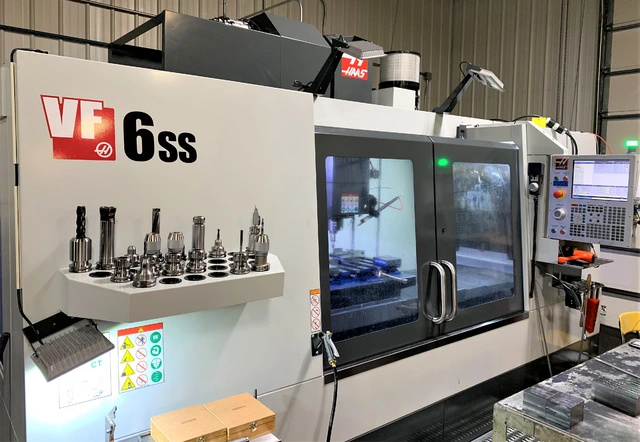
CNC machining costs between $75 and $150 per hour on average for US shops in 2026, with simple 3-axis milling running $40–$75/hr and complex 5-axis or Swiss-turned work, reaching $100–$250/hr. On a per-part basis, most prototype and low-volume parts land between $30 and $300 each, while production-run parts drop to $5–$60 apiece once setup and programming costs are spread across larger quantities. Beyond the hourly rate, your final price depends on material, tolerance, part geometry, finishing, and order quantity, which is why two shops quoting the “same” part can land 2–3x apart.
If you’re an engineer or buyer sourcing a machined part, that range isn’t very useful on its own. This guide breaks down exactly what goes into a quote for custom metal fabrication and CNC machining services, shows real per-part cost examples, and explains how to bring your price down without compromising quality. If you’d rather start with the basics first, see our overview of how the CNC machining process actually works.
CNC Machining Cost Per Hour (2026 Rates)
| Machine Type | Typical Hourly Rate |
|---|---|
| 3-axis CNC milling | $40 – $75/hr |
| CNC turning (lathe) | $35 – $65/hr |
| 4-axis milling | $60 – $110/hr |
| 5-axis milling / Swiss-type | $100 – $250/hr |
These rates typically bundle machine time, machinist labor, and overhead. Material, setup, tooling, and finishing are usually billed separately. A domestic Ohio-based shop generally sits mid-range on this scale, higher than overseas suppliers, but offset by shorter lead times, easier communication, no import tariffs or freight delays, and tighter quality control on every run.
What Actually Determines Your CNC Machining Price
A quoted hourly rate is only one input. The real cost of a machined part comes from six factors working together:
1. Material: Aluminum is the most cost-effective metal to machine and typically runs $3–$10 per pound in stock form. Stainless steel and titanium cost more per pound and machine slower, which raises both material and cycle-time costs.
2. Part complexity and geometry: Tight pockets, thin walls, deep holes, and multi-sided features require more setups, slower feed rates, and sometimes custom tooling, all of which add machine time. The machine best suited to your geometry also matters, see our breakdown of the different types of CNC equipment and what each one is built for if you’re unsure whether your part needs a mill, a lathe, or multi-axis capability.
3. Tolerance requirements: Standard tolerances (±0.005″) machine quickly. Precision tolerances tighter than ±0.001″ can add 30–50% to the cost because they demand slower cuts, more inspection, and often a second finishing pass.
4. Setup and programming: Every job needs CAM programming and machine setup before the first cut. On a one-off or 10-piece order, this fixed cost is spread across very few parts. On a 500-piece run, it barely moves the per-part price.
5. Quantity: This is the single biggest lever for lowering per-part cost. Once setup and programming are amortized, the marginal cost of an additional part is mostly material and cycle time.
6. Finishing: Anodizing, powder coating, bead blasting, plating, and passivation are priced as separate line items and can add 10–30% to a part’s total cost.
Not sure which of these factors is driving your price up? RiAlto’s engineering team reviews every print at no charge before quoting, send us your file and we’ll flag anything that’s adding unnecessary cost before you commit to a run.
Real CNC Machining Price Examples
- Simple aluminium bracket, low volume (1–10 pieces): $50–$150 per part
- Precision stainless steel component, tight tolerance: $150–$400 per part
- Production-run aluminum part, 250+ pieces: $8–$35 per part
- 5-axis titanium prototype: $300–$800+ per part
These are directional ranges. The only way to get an accurate number is a quote against your actual print, material spec, and tolerance callouts, quantity assumptions alone can swing a number by 3x. Get your exact price instead of guessing from a range.
How to Reduce Your CNC Machining Costs
- Loosen tolerances wherever function allows: Only specify tight tolerances for features that genuinely require them.
- Choose machinable materials: When the application permits, consider aluminum instead of titanium or hardened steel to reduce machining time and tooling costs.
- Order in batches: Combining a prototype run with an initial production batch helps spread setup costs across more parts. Our prototype development services support this transition from first article to full production.
- Simplify geometry: Avoid unnecessary deep pockets, sharp internal corners, and thin walls during the design phase. A quick design-for-manufacturability (DFM) review before finalizing the print can identify these cost drivers early.
- Specify finishing by surface, not by part: If only certain faces require a cosmetic finish, specify finishing requirements for those surfaces instead of the entire part.
Why Location Matters for Your CNC Machining Quote
Offshore machining can look cheaper on the hourly rate alone, but freight, tariffs, longer lead times, and harder-to-catch quality issues often erase that savings, especially on tight-tolerance or low-volume work. Sourcing from a domestic Ohio machine shop keeps communication direct, shortens lead time from quote to delivery, and lets you walk the floor or get real-time updates on your job.
Get an Accurate CNC Machining Quote From RiAlto Manufacturing
RiAlto Manufacturing has run CNC machining, laser cutting, and welding under one roof in Marion, Ohio, backed by four-plus decades of Ohio manufacturing experience. We’re not a broker every part is quoted and cut in our own 71,000-square-foot facility on 5-axis and dual-spindle Haas and Mazak machining centers, operating under an ISO 9001:2015-certified quality system, so the number you get back reflects real shop capability and current capacity, not a rough industry estimate. We also handle in-house laser cutting and welding, so multi-process parts don’t need a second vendor.
Getting a quote takes three steps:
Ready to get a real number for your part? Request a Quote or call our Marion, Ohio shop directly at (740) 914-4230.
Frequently Asked Questions
How much does CNC machining cost per hour?
CNC machining typically costs $40–$75/hr for 3-axis milling and $100–$250/hr for 5-axis or Swiss-type work, depending on machine class, material, and region.
Is CNC machining expensive?
CNC machining costs more than 3D printing or basic sheet metal for small, simple parts, but it becomes very cost-effective for precision metal parts, tight tolerances, and mid-to-high production volumes where per-part cost drops sharply.
How is CNC machining cost calculated?
Shops typically calculate cost as: material cost + (machine hourly rate × cycle time) + setup/programming + finishing + inspection, with a margin applied to the total.
What is the cheapest material to CNC machine?
Aluminum, particularly 6061, is generally the most cost-effective metal to CNC machines because it’s affordable, machines quickly, and requires less tool wear than steel or titanium.
Does CNC machining get cheaper in higher quantities?
Yes. Setup and programming costs are fixed per job, so spreading them across more parts significantly lowers the per-part price as order quantity increases.
How much does a CNC-machined prototype cost?
A single CNC-machined prototype part typically costs $50–$500 depending on material, complexity, and tolerance, since setup costs aren’t spread across multiple units.
Still guessing at your project cost?
Ranges only get you so far. Send RiAlto Manufacturing your print or 3D file and get an itemized CNC machining quote from our Marion, Ohio facility, usually within one business day.
Request a Quote | Call (740) 914-4230 | sales@rialtomfg.com
References:
https://www.iso.org/home/insights-news/resources/iso-9001-explained.html
https://www.bls.gov/ooh/production/machinists-and-tool-and-die-makers.htm