304 vs. 316 stainless steel comes down to one element. 316 adds 2–3% molybdenum, which helps it resist salt and chemical pitting. Choose 304 for dry, indoor, or mild-use parts. Choose 316 for road salt, brine, chemical washdowns, or corrosive processing. 316 usually costs 20–40% more.
If a quote has ever asked you, “304 or 316?”, You’re not alone. It is the stainless question we hear most. Picking wrong costs you either way: you overspend on 316 you didn’t need, or you watch a 304 part stain and pit within a season.
RiAlto Manufacturing has cut, formed, welded, and machined metal in Marion, Ohio, since 1981. [Add one real example here: a stainless part, its environment, and the grade you recommended.] This guide gives you the plain answer and a simple way to decide.
What Is the Difference Between SS 304 and 316?
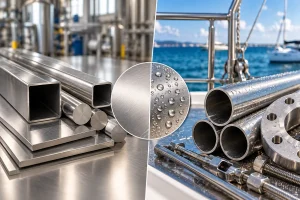
Both are austenitic stainless steels built on the same chromium-nickel base. They look alike, are non-magnetic when annealed, and both weld well with MIG and TIG welding. The difference is chemical, not visual: 316 adds molybdenum and a little more nickel. Molybdenum helps the protective oxide layer survive chlorides, which are the cause of pitting and crevice corrosion. 304 contains none.
SS 304 and 316 Chemical Composition at a Glance
|
Property |
304 |
316 |
|
Chromium |
18–20% |
16–18% |
|
Nickel |
8–10.5% |
10–14% |
|
Molybdenum |
None |
2–3% |
|
Max carbon |
0.08% |
0.08% (0.03% in “L” grades) |
|
Pitting resistance (PREN) |
~18–20 |
~24–26 |
|
Minimum tensile/yield (ASTM A240) |
75 / 30 ksi |
75 / 30 ksi |
|
Typical cost |
Baseline |
About 20–40% higher |
Notice the strength row. The ASTM A240 minimums are identical, so don’t choose 316 for strength. Choose it for corrosion resistance.
Is 316 Stainless Better Than 304?
Only where chlorides or aggressive chemicals are present. In salt, brine, bleach-based sanitizers, or acidic process streams, 316 resists pitting and lasts longer. In dry or mild conditions, 304 performs the same for less money, and it is slightly easier to machine. So when someone asks whether 304 or 316 stainless steel is better, the honest answer is that it depends on the environment. Our rule is to spec 304 until the environment gives you a reason to upgrade.
How Do Ohio Conditions Change the 304 or 316 Decision?
Most guides assume 316 is for oceans. Ohio’s chloride exposure comes from somewhere else: winter road salt, brine handling, and washdown chemistry. A 304 trailer component, outdoor enclosure, or farm equipment part that sits under de-icing spray can tea-stain and pit. The same part under a roof, or rinsed regularly, often does fine in 304. Match the grade to how the part is actually exposed, not to where it sits on a map.
304 vs 316 Stainless Steel for Food
Both grades are widely used for food contact. 304 covers most food prep, dairy, and brewing equipment. 316 is the safer call for salty, acidic, or chlorine-sanitized settings such as brines, tomato products, vinegar, and harsh daily washdowns. Confirm your plant’s own sanitation and audit requirements before choosing.
SS304 vs SS316 Price Difference
316 typically costs about 20–40% more per pound. The premium comes from molybdenum and nickel, whose prices move with alloy surcharges, so confirm against a current quote. On a small bracket, the gap is trivial. On a large weldment or a high-volume run, it adds up, and 316 can also wear tooling slightly faster. For how fabrication costs build up, see our guides to laser cutting service costs and CNC machining costs.
What Are the Disadvantages of 316 Stainless Steel?
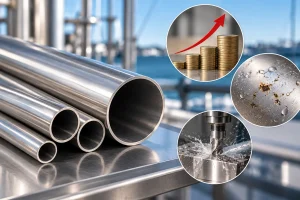 The drawbacks of 316 are mostly about cost and convenience, not performance. It runs roughly 20–40% more than 304, and it can wear cutting tools slightly faster during machining. Some sizes and forms are also stocked less widely than 304, which can stretch lead times. It gives you no strength advantage, and it is not the right grade for extreme heat. The biggest real-world risk is overspecifying: paying the molybdenum premium on a part that never sees chlorides. 316 also isn’t immune to staining. Heat tint left after welding or iron picked up from carbon-steel tools can still mark the surface.
What Are the Disadvantages of 304 Stainless Steel?
The weak spot of 304 is chlorides. Road salt, brine, and chlorine-based sanitizers can cause pitting and tea-staining. This is most likely in crevices, under gaskets, or anywhere residue sits. In heavily welded assemblies, standard 304 can also suffer carbide precipitation at the weld zone, which is why many shops default to 304L. It is also a poor match for strongly acidic chemical service. In dry or mild conditions, though, 304 has very few real disadvantages. It is cheaper and easier to source.
How Can You Tell If Stainless Steel Is 304 or 316?
You can’t tell by eye, and a magnet won’t settle it. Both grades are essentially non-magnetic when annealed, and both can become slightly magnetic after cold working or welding. Three methods are reliable:
- Mill test report (material certificate): it shows the chemistry of the heat the part came from.
- XRF analyzer / positive material identification (PMI): it reads the molybdenum directly.
- Molybdenum spot-test kit: it gives a fast shop-floor check.
If you have no paperwork and no test result, treat the material as unknown. [Add how RiAlto verifies and traces material, for example mill certs under your ISO 9001 system. Only include what you actually do.]
Is 304 Stainless Steel Toxic-Free, and What Is the Healthiest Grade?
Both 304 and 316 are widely accepted for food contact, and neither is considered toxic in normal use. No single grade is “the healthiest.” Trace amounts of nickel and chromium can be released from any stainless surface, especially with acidic or salty foods. 316 tends to be more stable in those conditions, but the difference is small. People with a nickel allergy should talk to their doctor about cookware choices. We’re an industrial fabricator, so for cookware, follow the manufacturer’s guidance. For equipment, use grades that meet your food-safety standards.
Which Stainless Steel Is Best, and What Is the Most Rust-Proof?
There is no single best grade. The best grade is the one that fits your environment and budget. Of the two common grades, 316 is the more rust-resistant. If conditions are harsher than 316 can handle, such as hot brine or aggressive chemicals, engineers step up to duplex 2205 or high-molybdenum alloys like 254 SMO. They cost more and are rarely needed for general fabrication, so most parts still use 304 or 316.
What Is the Difference Between 304 and 316L Stainless Steel, and Where Does 310 Fit?
The “L” means low carbon (0.03% max). That reduces carbide formation in weld zones, which matters on heavily welded assemblies. So 316L differs from 304 in two ways: it has molybdenum, and it has low carbon. Both 304L and 316L are common defaults for welded fabrications.
For SS 310 vs 316, the two solve different problems. 310 (roughly 24–26% chromium, 19–22% nickel) is built for extreme heat, such as furnace parts. 316 is built for corrosion. Don’t pick 310 to fight salt, and don’t pick 316 for extreme heat.
How Do 304 and 316 Fabricate?
Both weld well with MIG or TIG. Match the filler: 308L for 304 and 316L for 316. After welding, remove the heat tint and passivate (ASTM A967), because discoloured weld zones are where corrosion starts. Keep stainless away from carbon-steel grinding and tooling to avoid iron contamination. In machining, both work-hardened and 316 are slightly gummier. Sharp tools and steady feeds help.
Our welding, laser cutting, and CNC machining teams handle both grades under one roof. For the bigger picture of how these processes fit together, read our guide to common metal fabrication methods.
Quick Checklist: 304 or 316?
- Choose 304: indoor or dry use, enclosures, guards, brackets, general food prep, tight budgets.
- Choose 316: road-salt exposure, brine, chlorine or bleach sanitizers, chemical or pharmaceutical contact, and parts that are hard to inspect or replace.
- Not sure? Send your print and tell us where the part will live. We’ll recommend a grade before we quote. Request a quote.
Frequently Asked Questions
Which is better, 304 or 316 stainless steel?
Neither wins everywhere. 316 is better in salt, chlorides, and chemicals. 304 is better for general use because it performs well and costs less.
What is the difference between 304 and 316 stainless steel?
316 contains 2–3% molybdenum and more nickel. That improves pitting resistance in chlorides and raises the price. Strength is essentially the same.
Why is 316 stainless steel more expensive?
Molybdenum and extra nickel are costly alloying elements. Their prices change with the market, so the premium moves too.
Will 304 stainless steel rust in water?
Not in clean, fresh water. It holds up well there. Salt water, chlorinated water, or standing water with residue can cause staining or pitting over time. Regular rinsing helps.
Is 304 or 316 stainless steel better for food?
Both are used in food processing. 304 suits most applications. 316 suits salty, acidic, or heavily chlorinated washdown environments.
Which is better for cooking, 304 or 316 stainless steel?
For home cookware, 304 is the standard and works well. 316 rarely adds value unless you cook very salty or acidic dishes often, and it usually costs more.
Is 316 stainless steel stronger than 304?
Not meaningfully. ASTM A240 sets the same minimum tensile and yield strength for both.
Will a magnet stick to 316 stainless?
Usually no, because annealed 316 is essentially non-magnetic. Cold working or welding can add slight magnetism, so a magnet can’t confirm the grade.
References
- 1. Wikipedia: Pitting corrosion
https://en.wikipedia.org/wiki/Pitting_corrosion - 2. CDC / ATSDR: Nickel ToxFAQs
https://www.atsdr.cdc.gov/toxfaqs/tfacts15.pdf
Ready to talk through your part? Send us your print and where the part will live. Request a quote from RiAlto Manufacturing, and we’ll recommend 304 or 316 before we quote.