If you’re staring at a print, a material spec, and a deadline, the water jet cutter vs plasma decision usually comes down to one question: does this part need tight tolerance and a clean edge, or does it need to be cut fast and affordably? Both machines cut metal well. Neither is “better” in every situation, and picking the wrong one can mean scrapped material, a blown budget, or a part that doesn’t hold up in the field.
This guide breaks down how each process actually works, where each one wins, and how to make the call for your specific part, using the same criteria engineers and buyers in Ohio’s metal fabrication corridor rely on every day.
Water Jet vs Plasma at a Glance
|
Factor |
Waterjet Cutting |
Plasma Cutting |
|
Cutting method |
High-pressure water + abrasive (garnet) |
Ionized gas (electric arc) |
|
Typical tolerance |
±0.001″–0.005″ |
±0.01″–0.030″ |
|
Best material thickness |
Up to 6″–12″+ |
Up to ~1″–2″ (best under 1″) |
|
Materials cut |
Metal, stone, glass, composites, plastics virtually anything |
Electrically conductive metals only (steel, aluminum, stainless) |
|
Heat-affected zone (HAZ) |
None (cold-cutting process) |
Yes, narrow HAZ along the edge |
|
Cutting speed |
Slower |
Much faster (often 3–4x on thick steel) |
|
Operating cost |
Higher (abrasive, pump wear parts) |
Lower per foot cut |
|
Best for |
Tight tolerances, heat-sensitive parts, mixed materials |
Thick conductive metal, high-volume rough cutting |
What Is Plasma Cutting?
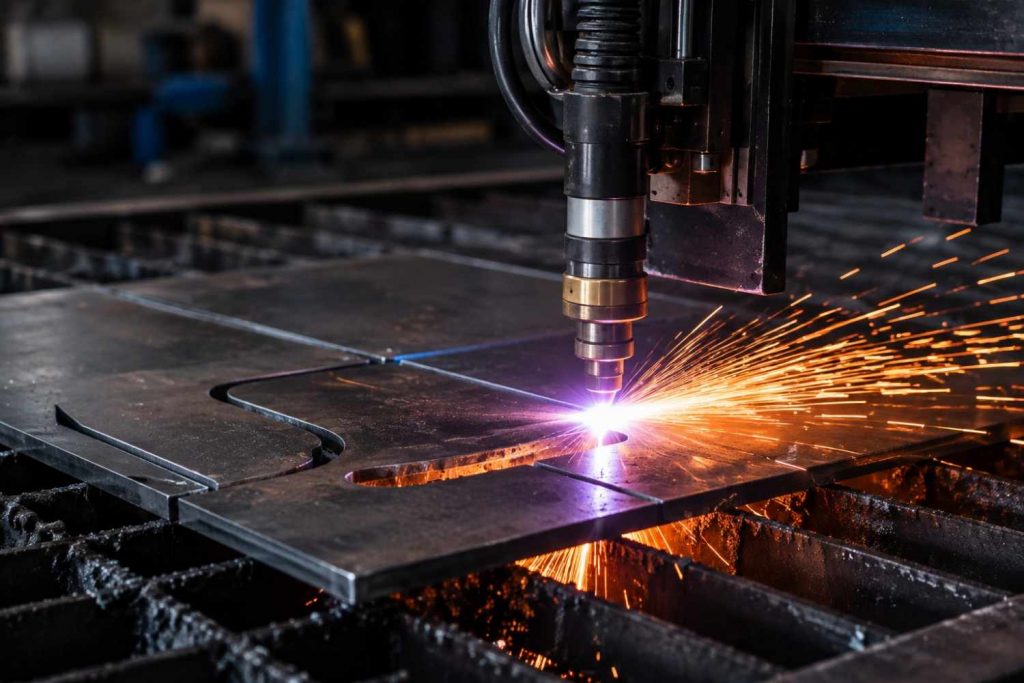
Plasma cutting uses an electrical arc passed through a compressed gas, typically oxygen, nitrogen, or compressed air, to superheat the gas into plasma, a fourth state of matter conductive enough to carry an electric current. That arc reaches temperatures over 25,000°F, melting through electrically conductive metal almost instantly while a high-velocity gas jet blows the molten material out of the kerf. While plasma cutting is effective for many applications, precision CNC laser cutting services are often preferred when projects require tighter tolerances, cleaner edges, and highly detailed cuts.
Because it’s a thermal process, plasma leaves a heat-affected zone (HAZ) along the cut edge and can produce dross (slag) that needs secondary finishing, especially on thicker plate. What it trades in edge finesse, it makes up for in speed and cost. A CNC plasma cutter vs waterjet comparison almost always favors plasma when the job is thick mild steel, structural brackets, or base plates that don’t need a mirror-finish edge.
What Is Waterjet Cutting?
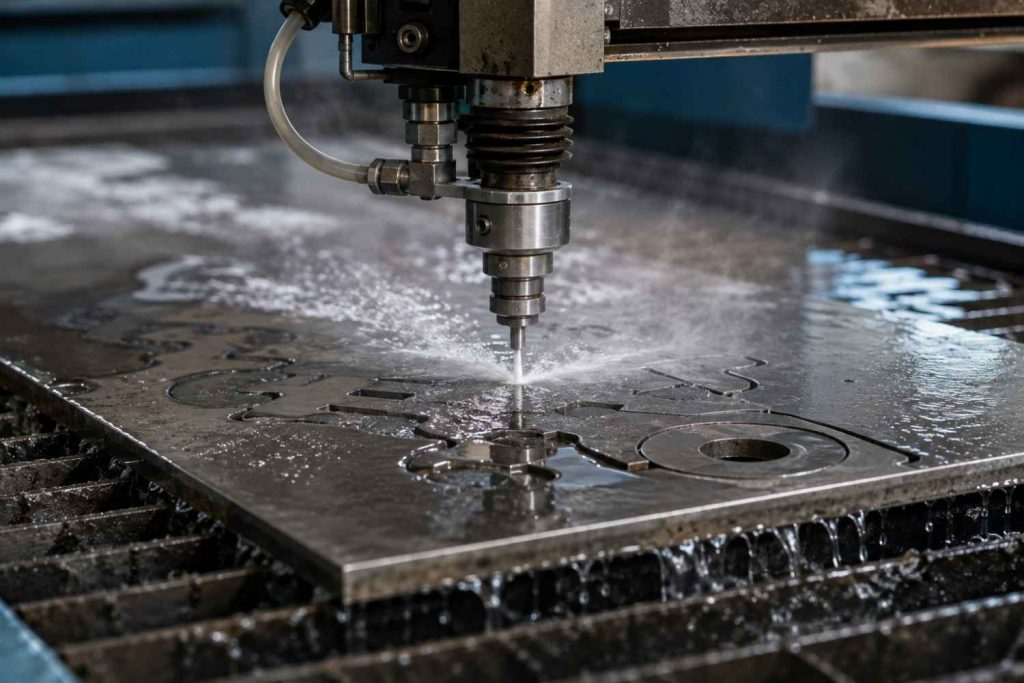
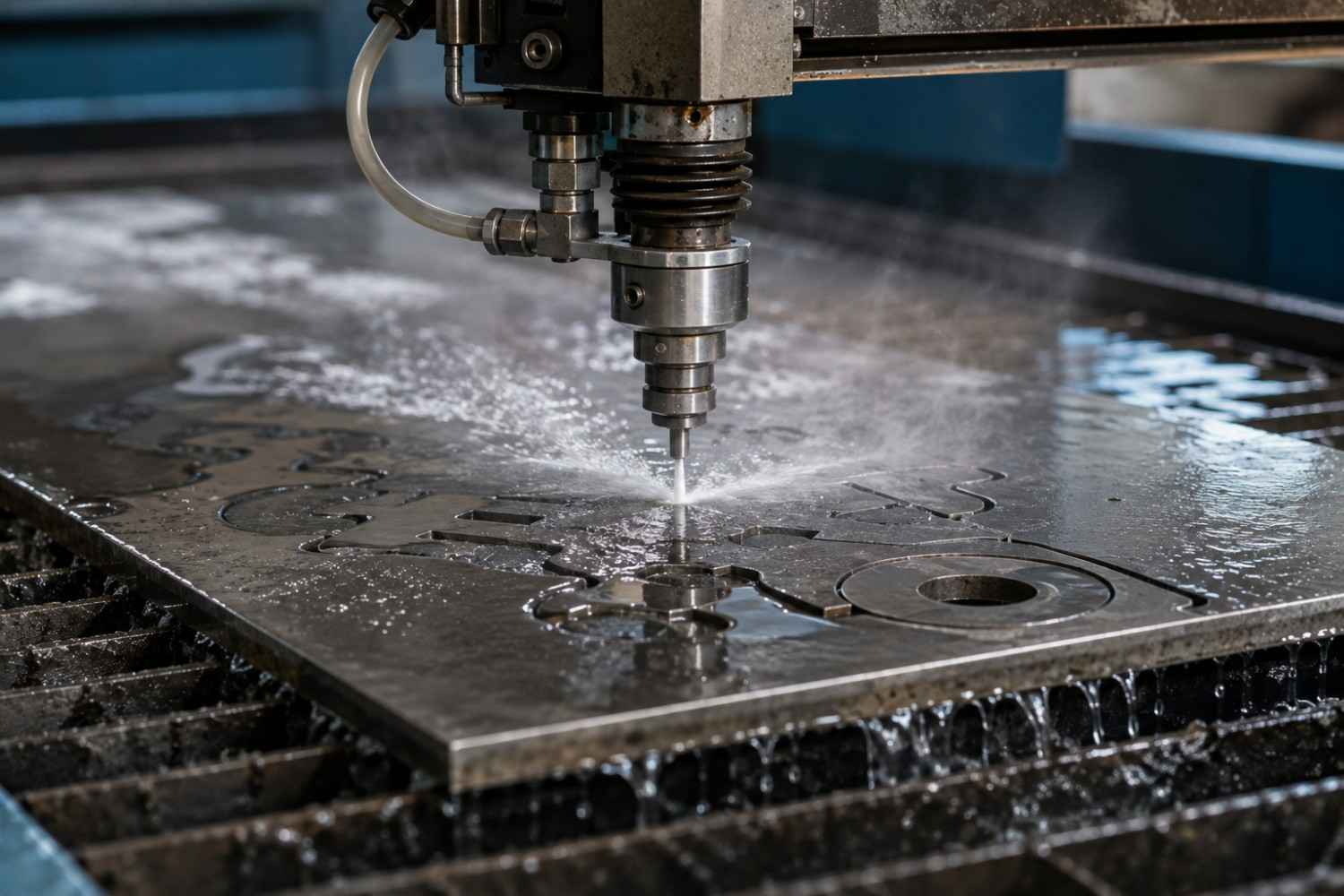
A waterjet cutter forces water through a tiny nozzle at pressures exceeding 50,000 psi roughly three times the speed of sound. For soft materials, pure water does the job. For metal, an abrasive (usually garnet) is introduced at the nozzle to create a cutting stream capable of eroding through virtually any material.
Because there’s no heat involved, waterjet cutting is a true cold-cutting process. There’s no HAZ, no thermal distortion, and no change to the material’s metallurgical properties, which matters enormously for hardened tool steel, titanium, or pre-heat-treated parts. The tradeoff is speed: waterjet cuts considerably slower than plasma, and the abrasive adds ongoing consumable cost.
Water Jet vs Plasma Table: Cost Breakdown
Buyers researching a water jet vs plasma table for their own shop usually compare two numbers: capital cost and cost-per-part.
- Machine cost: A CNC plasma table runs roughly $15,000–$100,000+ depending on class (air plasma, oxygen, or high-definition). A comparable waterjet system typically runs $100,000–$350,000+ because of the high-pressure pump and containment tank.
- Operating cost: Plasma is cheaper to run, often a fraction of waterjet’s cost per foot because it doesn’t consume abrasive garnet or require pump rebuilds.
- Finishing cost: Plasma-cut parts with tight-tolerance features often need secondary machining to remove dross or clean up the HAZ, which can erase some of the upfront savings. Waterjet parts frequently come off the table ready for weld-out or assembly.
If you’re only comparing sticker price, plasma wins. If you’re comparing total landed cost per finished part including rework the gap narrows considerably.
Which Materials Can Each Process Cut?
This is where the cnc plasma vs waterjet debate gets decided fast. Plasma only works on electrically conductive materials: carbon steel, stainless steel, and aluminium. It cannot cut plastics, composites, stone, glass, or non-conductive materials at all.
Waterjet has no such restriction. It cuts metals, plastics, rubber, foam, composites, stone, and glass with equal ease, which is why aerospace, medical, and mixed-material fabrication shops lean on it heavily.
Laser vs Plasma vs Waterjet: Where Does Laser Fit In?
Most engineers researching water jet cutter vs plasma are also weighing a third option: laser cutting. In a laser vs plasma vs waterjet comparison, laser cutting typically delivers the tightest tolerances and cleanest edges on thin-to-mid-gauge sheet metal (up to roughly 20 mm carbon steel, 12 mm stainless), often faster than waterjet and more precisely than plasma without the abrasive mess or the pump maintenance.
For shops that need production-grade accuracy on structural steel, stainless, or aluminium sheet without the added cost of abrasive consumables, fiber laser cutting frequently ends up being the more efficient middle ground. RiAlto Manufacturing’s precision laser cutting services run state-of-the-art fiber laser machines capable of holding tight tolerances across full production runs; you can see exactly how the industrial laser cutting process works in our technical breakdown.
How to Choose: A Simple Decision Framework
- Need the tightest possible tolerance or a heat-sensitive material?
Waterjet (or laser, for sheet metal) wins. - Cutting thick conductive metal fast and on budget?
Plasma is the workhorse. - Working with non-metals, composites, or stacked/mixed materials?
Waterjet is your only thermal-free option. - Producing sheet-metal parts that need clean edges without abrasive cost or slow cycle times?
Laser cutting is worth a serious look before committing to either. - Unsure of your tolerance requirement?
Start with your print’s callouts, then match the process to the number, not the other way around; over-specifying tolerance you don’t need inflates cost for no reason. For a full breakdown of how these numbers are set and verified, see our guide on precision sheet metal tolerances explained.
Built on Real Manufacturing Experience
RiAlto Manufacturing has operated a 71,000-square-foot fabrication facility in Marion, Ohio since 1981, and our ISO 9001:2015-certified processes are built around matching the right cutting method to the part not defaulting to whatever machine happens to be free. Our engineering team regularly walks Ohio manufacturers through this exact water jet cutter vs plasma vs. laser decision as part of quoting new work, because the wrong call here shows up later as scrap, rework, or a part that fails in assembly.
Frequently Asked Questions
Is waterjet cutting more accurate than plasma cutting?
Yes. Waterjet typically holds tolerances of ±0.001″–0.005″, while standard plasma holds ±0.01″–0.030″, though high-definition plasma can tighten that range on thinner material.
Can plasma cutters cut thicker material than waterjets?
No, waterjet generally handles greater thickness overall, cutting steel up to 6″ or more and even thicker aluminium, while plasma is most efficient under roughly 1″–2″.
Is plasma cutting cheaper than waterjet cutting?
Yes, both in machine cost and operating cost per foot. Waterjet’s abrasive consumable and high-pressure pump maintenance make it more expensive to run, though it can reduce secondary finishing costs.
What materials can’t be cut with a plasma cutter?
Plasma can only cut electrically conductive metals. It cannot cut plastics, wood, stone, glass, or composite materials that a waterjet cuts without issue.
Does waterjet cutting create a heat-affected zone?
No. Waterjet is a cold-cutting process, so there’s no HAZ and no thermal distortion, which is why it’s preferred for hardened or heat-sensitive materials.
Which is better for a CNC plasma vs waterjet shop investment?
It depends on your typical parts: plasma suits high-volume, thick, conductive-metal production; waterjet suits precision work across mixed materials. Many shops that need both accuracy and speed on sheet metal choose fiber laser cutting instead.
Need a Second Opinion on Your Part?
Choosing between waterjet, plasma, and laser shouldn’t be a guessing game. Request a quote and our team will match the right cutting process and the right tolerance to your part specs, material, and production volume.
For a deeper look at the technology behind waterjet cutting, you can also explore the Water jet cutter overview on Wikipedia. It explains how high-pressure water and abrasive materials are used to cut everything from metals to stone and glass, along with the process’s key advantages and applications.