Precision sheet metal fabrication is the process of cutting, bending, forming, welding, and finishing flat metal sheets into parts held to tightly controlled, engineering-specified dimensional tolerances commonly in the range of ±0.005″–0.010″ on laser-cut features, per class bands defined by ISO 2768. It combines CNC laser cutting, press-brake bending, MIG/TIG welding, and documented inspection (CMM, optical comparators, or hard gauging), typically under an ISO 9001 quality system, so parts fit and function consistently across a production run.
If you’ve ever compared two quotes for what looks like the same part and wondered why one costs noticeably more, the answer usually comes down to precision. Precision sheet metal fabrication is the manufacturing discipline that turns flat sheets of steel, aluminium, or stainless steel into functional components held to specified, measured, and documented tolerances – not “close enough”, but numbers that are verified and repeated across a production run. It matters because a hole or bend that’s out of tolerance can mean a bracket that won’t bolt down, a door that won’t close flush, or a part that fails at final assembly.
RiAlto Manufacturing has run precision laser cutting, CNC machining, and welding under one roof in Marion, Ohio, since 1981, and we’ve watched this trade shift from manual layout and shears to fibre lasers and multi-axis CNC. In this guide, we’ll walk through what precision sheet metal fabrication actually involves, how the process works step by step, what tolerances and standards mean for your parts, and how to evaluate a fabrication partner before committing your production to them.
What Is Precision Sheet Metal Fabrication?
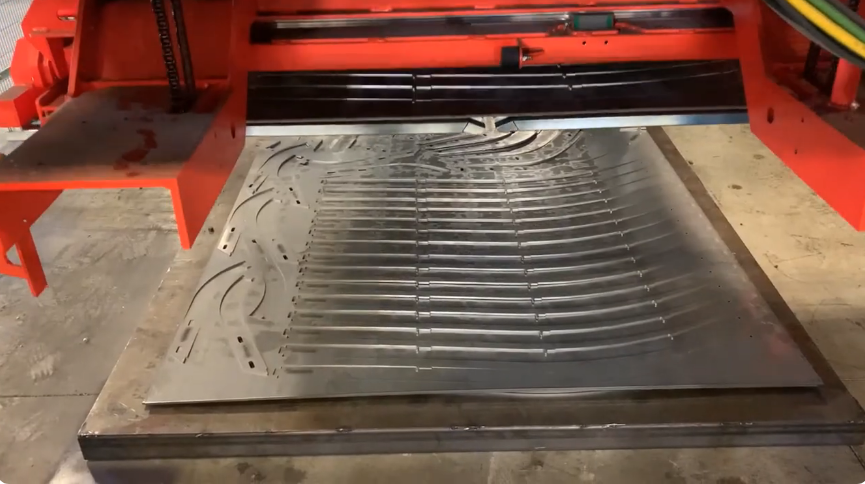
Precision sheet metal fabrication is a subset of general metal fabrication focused on dimensional accuracy. Standard fabrication accepts looser variance on non-critical, cosmetic, or purely structural parts. Precision metal fab is used wherever fit, alignment, or function depend on tighter, more repeatable dimensions; electronics enclosures, medical device housings, automotive brackets, custom assembly fixtures for manufacturing, and industrial machine components are common examples.
The discipline covers several related terms used somewhat interchangeably across industries:
- Precision metal working: The broader craft of shaping metal to controlled specifications
- Precision metal fabricating: The manufacturing operations (cutting, forming, joining) themselves
- Precision metal fab: Shorthand commonly used across engineering and procurement teams
Whatever term is used, the intent is the same: parts that consistently meet the drawing, with variation controlled and documented rather than left to chance.
The Precision Sheet Metal Fabrication Process, Step by Step
1. Design for Manufacturability (DFM) Review
Before any metal is cut, an experienced fabricator reviews the CAD file or drawing to flag features that are difficult, expensive, or unrealistic to hold at the requested tolerance. This step is often what separates a precision sheet metal fabrication company that partners with you on design from one that simply runs machines. Catching issues here can prevent costly rework later.
2. Material Selection
Gauge, alloy, and grain direction all influence how a sheet cuts, bends, and holds tolerance. Common materials include cold-rolled steel, stainless steel (304/316), aluminum (5052, 6061), and galvanized steel. If you’re weighing options for a specific application, our guide on choosing the right material for manufacturing breaks down how to match metal properties to part function.
3. CNC Laser Cutting / Punching
Fibre laser cutting is the industry standard for precision cutting, generally capable of holding tighter positional accuracy and cleaner edges than plasma cutting or manual shearing. Exact achievable tolerance varies by machine, material thickness, and part geometry; always confirm capability with your fabricator’s current equipment rather than a general industry figure.
4. Press Brake Forming & Bending
CNC press brakes bend flat blanks into 3D geometry, a process we’ve walked through in more detail in our guide to shaping parts on a press brake. Bend angle tolerance commonly falls in the ±0.5°–1° range depending on material and setup, and each additional bend adds a small amount of cumulative (stack-up) variation to the finished part.
5. Welding & Assembly
MIG and TIG welding join formed components into finished weldments. Fixturing and jig design matter a great deal here; a poorly fixtured weld can introduce distortion that’s difficult to correct fully downstream. For higher-volume or repeatable weldments, shops that design and build their own fixtures for assembly lines in-house can hold positioning tighter and more consistently than generic tooling.
6. Finishing
Deburring, grinding, powder coating, plating, or anodizing protect the part and prepare it for final use.
7. Inspection & Quality Control
First-article inspection, in-process checks, and final measurement using CMM (coordinate measuring machines), optical comparators, or calibrated hand gauges depending on the feature, confirm the part matches the drawing before it ships.
Sheet Metal Fabrication Tolerances Explained
Tolerance is the permissible variation between a drawing dimension and the actual part, and it’s one of the most misunderstood specs in sheet metal work. Designers sometimes default to CAD software’s built-in machining-style tolerances without realizing sheet metal follows a different process chain than solid-stock CNC machining: cutting, bending, welding, and finishing each add their own variation to the final part. Even the cutting stage alone can shift what’s achievable; we’ve broken down where waterjet and plasma cutting fall short of laser on accuracy, which matters if your part is being quoted with a different cutting method than what this page assumes.
|
Feature |
Standard Tolerance (typical) |
Precision Tolerance (typical) |
|
Laser-cut linear dimension |
±0.010″–0.020″ |
±0.005″–0.010″ |
|
Hole diameter/position |
±0.005″–0.010″ |
±0.003″–0.005″ |
|
Bend angle |
±1.0° |
±0.5° |
|
Formed flange length |
±0.020″–0.030″ |
±0.010″–0.015″ |
|
Overall welded assembly |
±0.060″–0.125″ |
±0.030″–0.060″ |
Note: These are general industry-typical ranges compiled from common fabrication practice, not a guaranteed capability chart for any specific shop. Achievable tolerance depends on material, thickness, part geometry, equipment condition, and process sequence (number of bends, welds, and secondary operations). Always confirm exact achievable tolerances with your fabricator’s engineering team during quoting, and reference ISO 2768 tolerance classes on your drawing for anything function-critical.
Why Every Dimension Doesn’t Need to Be “Precision”
Not every feature on a part needs the tightest achievable tolerance. Mounting holes, mating interfaces, and sealing surfaces are usually function-critical and worth tighter control. Non-mating edges and cosmetic dimensions can often stay at standard tolerance without affecting how the part works, which helps control cost. A good fabrication partner will flag this distinction during DFM rather than defaulting every dimension to maximum precision.
Standards That Govern Precision Sheet Metal Fabrication
- ISO 9001:2015: The quality management system standard covering material traceability, process control, and continuous improvement. It’s a common baseline trust signal for established fabricators.
- ISO 2768: The international standard defining general tolerance classes (f = fine, m = medium, c = coarse, v = very coarse) for linear and angular dimensions not individually toleranced on a drawing.
- AS9100: An aerospace-specific extension of ISO 9001 for suppliers serving aerospace and defence customers.
- GD&T per ASME Y14.5: Geometric dimensioning and tolerancing (true position, perpendicularity, flatness, profile) used to control complex hole patterns and mating features, typically verified with CMM or optical inspection.
RiAlto Manufacturing operates under an ISO 9001-certified quality system and is a member of the FMA (Fabricators & Manufacturers Association), reflecting the same industry-standard commitment to documented, auditable process control described above.
Precision vs. Standard Sheet Metal Fabrication: Which Do You Need?
|
Factor |
Standard Fabrication |
Precision Sheet Metal Fabrication |
|
Typical tolerance range |
±0.020″–0.060″ |
±0.003″–0.010″ |
|
Common applications |
Enclosures, brackets, guards |
Medical, electronics, hardware-dense or mating assemblies |
|
Inspection method |
Visual checks, hand gauges |
CMM, optical comparators, documented first-article inspection |
|
Relative cost |
Lower |
Higher reflects added process control and inspection time |
|
Lead time impact |
Generally faster |
Can be slightly longer due to added QC steps |
Decision guide: If a feature needs to bolt, seal, align with another component, or feed into automated assembly, specify precision tolerance on that feature. If it’s structural, cosmetic, or stands alone, standard tolerance can save cost without affecting function. This is a decision best made feature-by-feature, not part-by-part.
Why Location Matters: Sourcing Precision Fabrication in Ohio
For manufacturers based in Ohio and the surrounding Midwest, sourcing precision sheet metal fabrication locally has practical advantages beyond price: shorter freight times, easier in-person design reviews, and faster response when a production issue needs a same-day conversation rather than a multi-day email thread across time zones. RiAlto Manufacturing is based in Marion, Ohio, centrally located to serve automotive, agriculture, energy, and industrial customers throughout Ohio and the broader Midwest without the lead-time and logistics overhead of sourcing overseas or cross-country.
How to Choose a Precision Sheet Metal Fabrication Company
- Ask for their quality certifications: (ISO 9001, AS9100 if applicable) and what inspection equipment they actually run (CMM, optical comparator, hand gauges).
- Check if they offer DFM feedback: Before quoting, a fabricator that reviews your design for manufacturability, rather than just quoting the print as-is, is generally a stronger long-term partner.
- Confirm in-house capabilities: Laser cutting, CNC machining, welding, and finishing under one roof can reduce handoffs between vendors, shorten lead time, and simplify accountability if something needs correcting. We’ve explained how the laser cutting process actually works in more depth if you want to see what “in-house laser cutting” really covers. If your project also involves moving or staging parts on the line, it’s worth asking whether the same shop offers custom material handling products for manufacturing, since that can be handled by one partner instead of a separate vendor.
- Review relevant industry experience: A shop that has served automotive, medical, or energy customers is more likely to understand function-critical tolerance requirements in those spaces.
- Ask about first-article inspection and documentation: For traceability on production runs, especially for regulated or safety-relevant parts.
What Sets RiAlto Manufacturing Apart
RiAlto Manufacturing has operated from Marion, Ohio, since 1981 as a family-owned business, and several things about how we’re structured are worth knowing if you’re evaluating a fabrication partner:
- Engineering and fabrication under one roof: Our team reviews design intent alongside the machinists and welders building the part, rather than handing it off between separate design and production vendors.
- A single point of contact from quote to delivery: Instead of routing communication through multiple account layers, you work directly with one team throughout the process.
- In-house laser cutting, CNC machining (including 5-axis capability), and MIG/TIG welding: All performed with advanced metal fabrication equipment in a 71,000-square-foot facility, reducing dependence on outside vendors for critical process steps.
- ISO 9001-certified quality system and active FMA membership: Supporting documented, auditable process control.
- Four-plus decades of serving Ohio and Midwest manufacturers: Experience across the automotive, agriculture, medical equipment, energy, and industrial equipment industries.
You can review our full capability list on our Services page, see the machines behind these tolerances on our Equipment page, and read more about our certifications and quality process on our Quality page.
Frequently Asked Questions
What is precision sheet metal fabrication?
It’s the process of cutting, bending, welding, and finishing sheet metal into parts held to tightly controlled, verified dimensional tolerances commonly in the ±0.005″–0.010″ range on cut features, depending on process and equipment.
What tolerance is standard for sheet metal fabrication?
Many fabricators default to ISO 2768-m (medium) unless a tighter tolerance is specifically called out on the drawing. Exact bands depend on dimension size, so it’s worth confirming ISO 2768 class directly with your fabricator.
What is the difference between sheet metal fabrication and precision machining?
Sheet metal fabrication cuts, bends, and welds flat stock through multiple process steps, each adding some variation. Precision machining removes material from solid stock in a fixed setup and generally holds tighter tolerances, but typically at a higher cost per part.
How do I know if my part needs precision tolerances?
If a feature mates with another part, holds hardware, seals against another surface, or feeds into automated assembly, it likely needs tighter tolerance control. Purely structural or cosmetic dimensions usually don’t.
What certifications should a precision metal fab company have?
ISO 9001 is a common baseline, with AS9100 relevant for aerospace work, along with documented CMM or optical inspection processes for verifying tight tolerances.
Does tighter tolerance always mean higher quality?
Not necessarily. Tolerance describes capability, not quality on its own. A part made to tighter tolerances than it functionally needs isn’t automatically “better”; it’s simply more expensive to produce.
How much does precision sheet metal fabrication cost?
Cost depends on material, part complexity, number of bends and welds, tolerance requirements, finishing, and order volume, so there’s no single per-part figure that applies broadly. As a rule of thumb, tighter tolerances, more secondary operations (welding, finishing), and lower volumes all push cost up, while standardizing tolerance only where function requires it helps control cost. The most reliable way to get an accurate number is a quote based on your actual drawing and volume.
Ready to Get Started?
Choosing the right precision sheet metal fabrication company comes down to process control, certified quality systems, and in-house capability. Request a quote from RiAlto Manufacturing and let our team review your drawings for fit, function, and cost-smart tolerancing before you commit to production.
References:
https://www.metal-fabrication.org.uk/precision-sheet-metal-fabrication.html